%20--%3e%3cg%3e%3cpath%20d='M3.1506524,86.9652365v-15.1247382c9.032272,3.3614992,19.2412694,5.0422487,30.6269924,5.0422487,13.8215046,0,20.733261-4.6205553,20.733261-13.863674,0-6.7229983-4.2450473-10.0844975-12.7291178-10.0844975h-14.11669C9.22103,52.9345756,0,44.5328357,0,27.727348,0,9.2431187,13.1287225,0,39.3861676,0c10.0824894,0,19.6408742,1.4699029,28.6731461,4.4097086v15.1247382c-9.032272-3.3594911-18.5906567-5.0402407-28.6731461-5.0402407-15.1247382,0-22.6871073,4.4117166-22.6871073,13.2331419,0,6.7229983,3.6546765,10.0824894,10.9660376,10.0824894h14.11669c19.6187855,0,29.4281782,8.4037479,29.4281782,25.2092357,0,18.9039147-12.4761017,28.3578801-37.4323214,28.3578801-11.385723,0-21.5947204-1.4699029-30.6269924-4.4117166Z'/%3e%3cpath%20d='M153.1367009,86.9652365c-7.7732158,2.9418138-16.5966491,4.4117166-26.4682918,4.4117166-32.3499113,0-48.524867-15.6488429-48.524867-46.9485367C78.1435421,14.8094721,94.3184977,0,126.6684091,0c9.8716427,0,18.695076,1.4699029,26.4682918,4.4097086v15.1247382c-7.7732158-3.3594911-16.1749557-5.0402407-25.2072276-5.0402407-21.6368898,0-32.4543307,9.9780701-32.4543307,29.9342103,0,21.6368898,10.8174409,32.4543307,32.4543307,32.4543307,9.032272,0,17.4340118-1.6807496,25.2072276-5.0422487v15.1247382Z'/%3e%3cpath%20d='M162.7478955,90.746421V.628524h16.7010684v37.1813134h44.4284164V.628524h16.6990604v90.117897h-16.6990604v-38.4423776h-44.4284164v38.4423776h-16.7010684Z'/%3e%3cpath%20d='M253.3402959,90.619913V.628524h40.9624979c18.4018987,0,27.602848,8.0463125,27.602848,24.1369295,0,10.8816989-7.1627644,19.8938902-21.4903011,27.0345659l28.5486461,38.9464016h-21.048527l-27.41409-39.2616677v-7.6246191c15.966117-2.7309671,23.9481715-8.9258446,23.9481715-18.5906567,0-6.6366516-3.7390152-9.9559814-11.2170456-9.9559814h-22.8758653v75.3064168h-17.0163345Z'/%3e%3cpath%20d='M346.1048212,90.746421h-17.1408345L367.2155983.628524h17.9601246l39.0729097,90.117897h-17.9621326l-10.2712475-24.5766955h-29.9342103l5.7350308-14.4942061h18.1488826l-14.17894-33.8419029-29.6811942,72.9128045Z'/%3e%3cpath%20d='M494.923315.628524v14.3697061h-45.1211985v22.6871073h42.9785942v14.9339721h-43.1673522v23.6329054h46.1935047v14.4942061h-62.579307V.628524h61.6957589Z'/%3e%3cpath%20d='M583.0873657,86.5877204c-7.2691917,3.1928218-16.3637137,4.7892327-27.2875819,4.7892327-31.8037179,0-47.7055769-15.6488429-47.7055769-46.9485367,0-29.6189443,16.1749557-44.4284164,48.524867-44.4284164,9.8716427,0,18.695076,1.4699029,26.4682918,4.4097086v15.1247382c-7.7732158-3.3594911-16.1749557-5.0402407-25.2072276-5.0402407-21.6368898,0-32.4543307,9.9780701-32.4543307,29.9342103,0,21.6368898,10.2089975,32.4543307,30.6269924,32.4543307,3.0241444,0,6.4679742-.5040241,10.3334974-1.5120722v-26.2172838h16.7010684v37.4343294Z'/%3e%3cpath%20d='M660.5383949.628524v14.3697061h-45.1211985v22.6871073h42.9785942v14.9339721h-43.1673522v23.6329054h46.1935047v14.4942061h-62.579307V.628524h61.6957589Z'/%3e%3cpath%20d='M676.8599392,90.619913V.628524h40.9624979c18.4018987,0,27.602848,8.0463125,27.602848,24.1369295,0,10.8816989-7.1627644,19.8938902-21.4903011,27.0345659l28.5486461,38.9464016h-21.048527l-27.41409-39.2616677v-7.6246191c15.966117-2.7309671,23.9481715-8.9258446,23.9481715-18.5906567,0-6.6366516-3.7390152-9.9559814-11.2170456-9.9559814h-22.8758653v75.3064168h-17.0163345Z'/%3e%3c/g%3e%3cpath%20d='M784.4642496,75.9375v15.4394531h-16.7001953v-15.4394531h16.7001953Z'/%3e%3c/svg%3e)
First a thank you.
To all the managing directors, sales managers and employees who have taken the time to talk to us in the last few months. Open. Honest.
As part of our own restructuring, we initiated these deeper conversations to better understand what is really affecting the industry right now and to better respond to the market. We have started to take a closer look – at the industry, at its challenges, at what is really moving. What emerged after two months of intensive discussions, observations and analyzes is shown here.
This is not a classic trend report. No white paper.
These observations come from personal conversations before publication in May 2026. They are not a representative survey of the whole industry.
(The questions asked are at the end of this article)
One thing was particularly interesting: Hardly anyone talked about bad products. Falling prices or a lack of purchasing power were also rarely the focus.
The conversations focused on exploring existing opportunities to broaden the business.
Many companies have been building high-quality furniture for decades. With experience, precision and real manufacturing expertise. Nevertheless, the same themes emerged in almost every conversation: trading no longer works like it used to. Products become comparable. And many manufacturers are increasingly losing direct contact with the end customer.
One sentence in particular stuck with me:
"We actually build good products. But online everything looks like a catalog."
That probably describes the actual problem pretty well. So which direction do you take? Continue on the current path - endure, keep still, wait? Or do you slowly start to build new paths?

Why a fast online shop alone is not enough
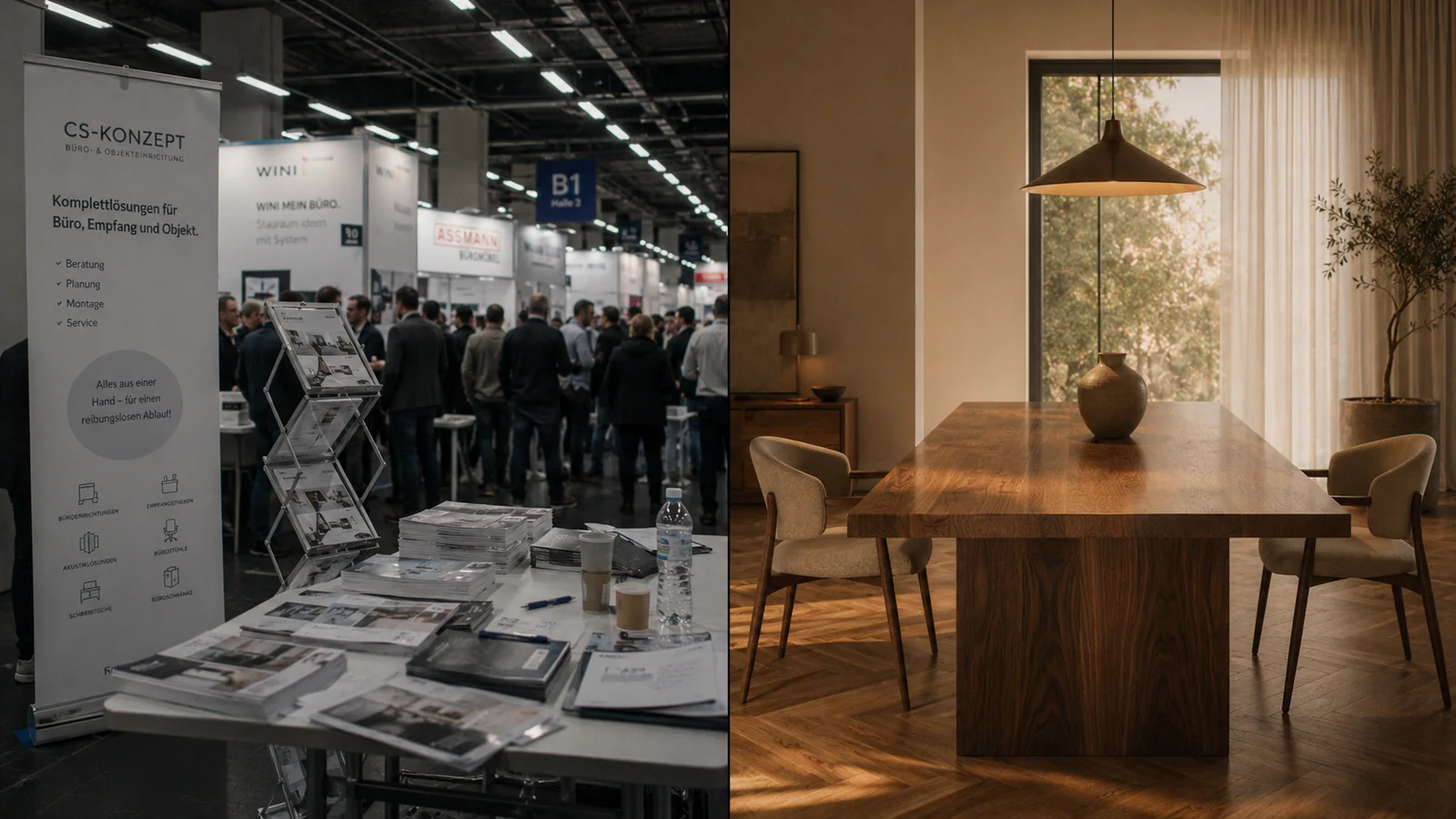
Many companies understandably react to this development with the obvious: a shop is needed. New pictures. More reach. That's understandable - but an online shop is not automatically a functioning direct sales company. This also came up again and again in many conversations.
"We've had the online shop for half a year now. But nothing really works."
Today the Internet is full of furniture, perfectly lit rooms and visual impressions. People now see more visual content in a single day than they used to, sometimes in several weeks. They are no longer just comparing products – they are comparing effects.
So the solution lies in the individual. But a WordPress site, an AI-generated website, a Shopify online shop – all of these often seem interchangeable because many systems end up being very similar. It's easy and quick, that's true. And this is exactly where visibility often separates from interchangeability. When every manufacturer jumps on the same bandwagon, it often leads to brands appearing more and more similar. In the end, everything seems interchangeable. And of course that makes the purchase decision more difficult. We have described in more detail here how AI currently impacts design and visualization → AI in design and 3D visualization

Serve two worlds at the same time
Many manufacturers today face a double challenge: continuing to serve traditional retailers professionally – with catalogs, renderings and product data. And – if you have decided to take this step – at the same time build your own digital presence that really resonates with the end customer. This desire for orientation was particularly noticeable:
"How do you approach the topic of B2C? What is your approach? Do you have a concept? If so, I would be interested in that specifically and we could exchange ideas about it."
It's not like it's a big surprise to everyone that you have to evolve with the market. And since the pandemic at the latest, we have known that the switch and the willingness to react cannot be long in coming - if you want to survive. We have looked at the fact that reacting early often creates more calm in the long term than hectically following suit → Digitalisation for SMEs: how early steps create room to act.
The product presentation has to be created and paid for anyway - because as we have heard, the manufacturers themselves pay for the marketing measures that are then placed in the furniture stores. The group of customers who were in the furniture store ten years ago are no longer the same ones who make a conscious purchase decision on a website today - and you have to differentiate and present them clearly. Excel lists are enough for retailers – the end customer needs something to marvel at.
So the real question is not whether content is being produced. But whether this creates real brand impact and whether it flows into the right channels. The solution is rarely a single measure. There are many options today - from high-quality brand appearances to more emotional product presentations to photorealistic product worlds and configurators directly in the browser. We have described in more detail here what such photorealistic product worlds can look like today → Pixel Streaming – The photorealistic 3D configurator
The real challenge lies in finding out what actually makes sense for the respective company. Often it is more about combining the right building blocks in a sensible way and consistently developing them further.
The magical marketing employee
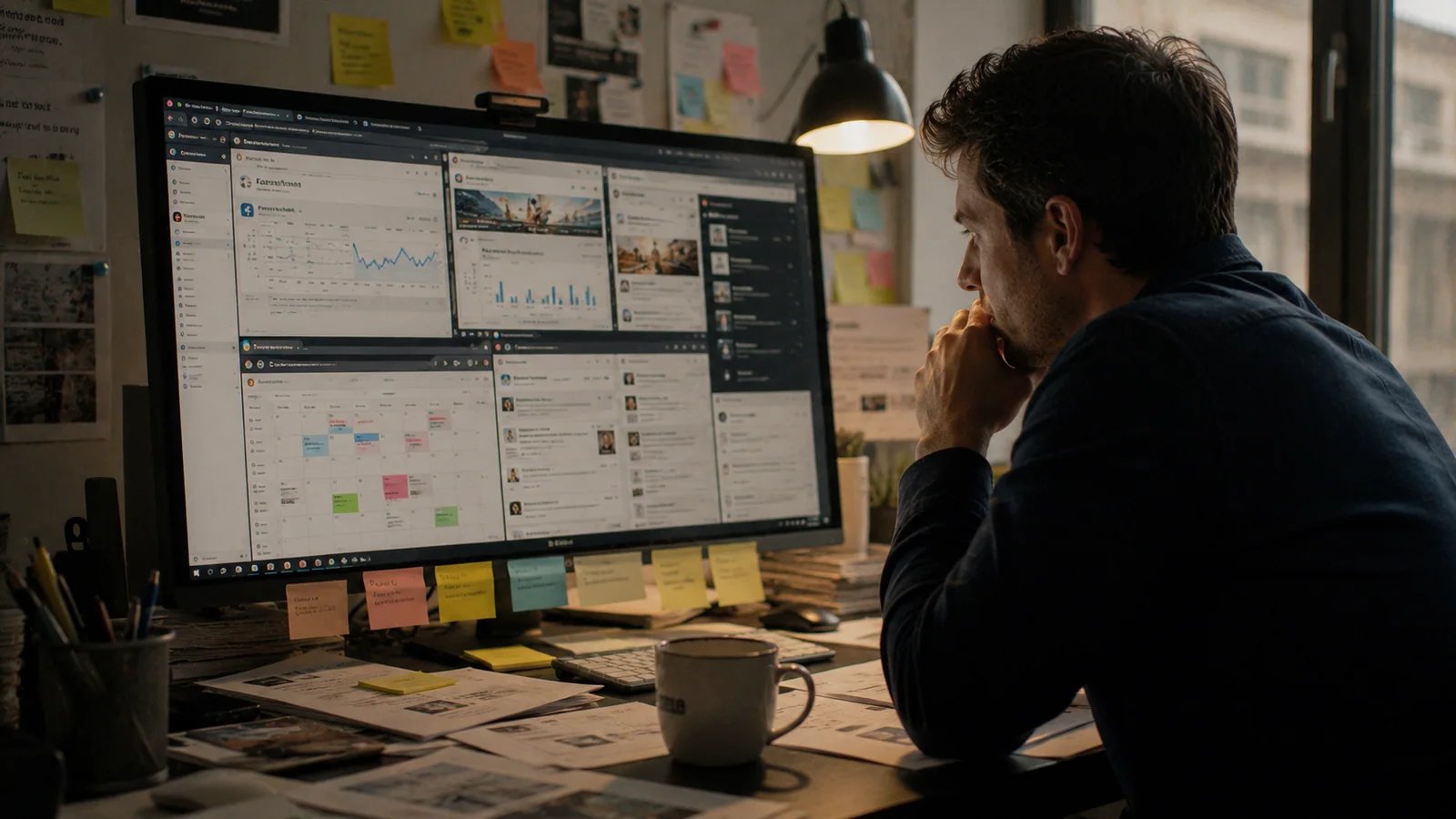
Some told us they had hired a marketing manager and tried internal measures to create stability—an understandable decision. Several interviewees said a single new position could not resolve the fundamental sales questions.
Setting up social media channels, making a few posts – these are sensible steps, but not a strategy. And as it turns out, not a sustainable approach either. A large manufacturer fell victim to exactly this behavior. Not only does the responsibility suddenly fall on a single person from whom one now expects or hopes to turn things around, but in the end the result is often more content - but not automatically more trust. If things go badly, this can even lead to customers losing trust and switching to a competitor.
One respondent painfully admitted this to us and decided to rebuild the topic in more fundamental terms.
Why this topic concerns us
Perhaps this topic concerns us so much because our own roots lie precisely in this industry. We originally come from trade fair construction and carpentry. We know how materials react under light. How surfaces are perceived. How rooms create atmosphere.
Especially in the furniture sector, people rarely only buy wood thicknesses or technical data. You are buying peace, a feeling of material, atmosphere – a feeling of home. And it is precisely this level that is often lost online.
Many manufacturers have decades of experience behind them. People who really understand materials. They know how wood works, how surfaces age, and how constructions work in the long term. Such knowledge does not come about overnight. And that's exactly why it would be a shame if high-quality products were to be compared only based on price at some point, while at the same time more and more interchangeable cheap goods are entering the market.
The industry is not lacking in quality.
It often has too little visibility for the quality that has long been there.
The questions we asked
1. Why do you think an end customer today buys from a dealer and not directly from you?
2. How long have you been active in the B2C segment – and have you been successful in it? If yes:
▸ What was your experience along the way?
▸ What were the biggest stumbling blocks? What was the most difficult or frustrating part of the journey?
▸ How did you ultimately solve the problem? How much did this emergency solution cost?
▸ Have you built up internal know-how for the journey?
▸ How do you conduct market research about your customers' purchasing interests?
3. If not: for what reasons?
4. How did your last big design project go? What was the hardest or most frustrating part?
5. Which products would you like to sell directly but are currently unable to? Why is that?
6. Where do you currently have the most margin?
7. Do you work with digital prototypes?
8. Where do you currently see the greatest potential – for your industry or for your company personally? And why haven't you addressed this yet?
Supplementary articles
These topics relate to the article – if you would like to continue reading:
■ Digitalisation for SMEs: how early steps create room to act →
■ There is a path between idea and company →
■ The furniture industry at a crossroads – what manufacturers really think →
Editorially revised on 26 October 2026.